
Why energy procurement concepts matter for businesses
Renewable energy procurement is the process by which companies secure clean electricity through contracts, certificates, and on-site projects. Understanding the key terms helps energy, finance, and sustainability teams compare options, manage risk, and build credible decarbonisation strategies aligned with corporate and regulatory expectations.
Across Asia, industrials and corporates are under pressure from customers, investors, and regulators to cut Scope 2 emissions. According to the RE100 2024 report, over 400 major companies have now committed to 100% renewable electricity. To participate credibly, your team must be fluent in concepts like PPAs, RECs, additionality, and hedging.
This article introduces a practical Renewable Energy Procurement Glossary tailored to Asia. This article gives you a quick orientation on the key concepts. You can download the five-page glossary below for simple definitions covering contracts, certificates, financial terms and grid concepts. Use it as a bridge between technical experts, legal teams, and business leaders.
Core contract, environmental and financial terms made simple
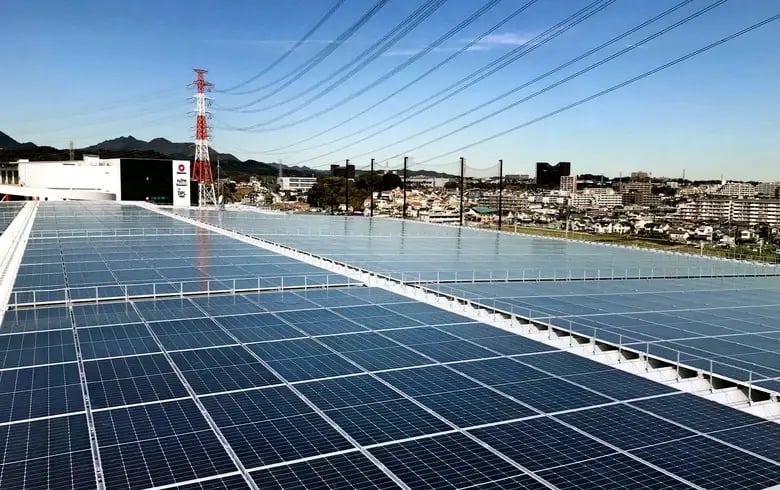
Power Purchase Agreements (PPAs) are long-term contracts—often 10–25 years—where a buyer agrees to purchase electricity directly from a generator at an agreed price. Corporate PPAs (cPPAs) are signed by companies rather than utilities and can be on-site (e.g., rooftop solar on a factory) or off-site via the grid.
On-site PPAs let you host solar “behind the meter,” reducing grid consumption and, in some markets, enabling net metering to sell surplus power back. Off-site PPAs can be physical (you receive power and Renewable Energy Certificates) or virtual (VPPAs), which are financial contracts that hedge price risk while still delivering RECs for your reporting.
Environmental instruments like RECs and I-RECs certify that 1 MWh of electricity came from renewable sources and are widely used to meet market-based Scope 2 accounting rules, as described in corporate procurement guidance by the Renewable Energy Institute’s 2026 guidebook (Renewable Energy Institute). Financial concepts such as CapEx vs. OpEx models, tariff escalators, hedging, IRR, and creditworthiness define who pays, how returns are measured, and how risk is shared.
Grid, policy and market realities shaping Asia’s energy future
Grid and technical concepts determine whether a renewable project can reliably deliver electricity to your facilities. Interconnection, load profile, peak demand, baseload, and hybrid systems (for example, solar-plus-storage) all influence project sizing and contract structure. Grid curtailment and dispatch priority affect how often your contracted project can actually generate and sell power.
Policy tools such as Feed-in Tariffs (FiTs), feed-in premiums, Renewable Portfolio Standards (RPS), and net metering shape the economics of projects and the availability of corporate procurement options. In many Asian markets, state-owned utility monopolies still control generation and retail, while deregulation is gradually opening room for independent producers and cross-border power trading.
Key institutions like Singapore’s EMA, Japan’s METI, or Indonesia’s MOEMR set the rules that govern renewable procurement. Regional initiatives such as the ASEAN Power Grid (APG) aim to connect national systems, enabling more flexible and lower-cost renewables over time. Industry glossaries curated by organisations like DNV (DNV) and corporate-focused platforms (Soldera) highlight just how quickly this landscape is evolving.

How to use this glossary to make better energy decisions
This glossary is designed as a practical reference for commercial, sustainability, and executive teams who are new to clean energy procurement. Download the glossary below and start with the terms most relevant to your business: contracts and procurement models, environmental instruments, financial and risk terms, and grid and technical concepts.
Next, map the terminology to your own situation: Which terms show up in your energy bills, sustainability targets, or supplier contracts? For example, understanding whether your utility tariff includes a fuel pass-through charge, or whether RECs in your portfolio are I-RECs or domestic certificates, can change how you report decarbonisation progress.
Finally, use this shared vocabulary to ask sharper questions and negotiate better deals. When your team understands PPAs, hedging, additionality, and CBAM, you can align decarbonisation goals with risk, cost, and compliance. That is why this glossary is more than a list of definitions—it is a starting point for more confident, credible decisions in the energy transition.
Download the full glossary
Keep the key renewable energy procurement terms in one practical, five-page guide.